
English| EUR
Suggested for you
More currencies
Choose a language
The weather in Mu Cang Chai shapes every element of a visit—from the water levels in the paddies to the clarity of mountain views. The district sits at elevations between 1,000 and 2,000 meters in Yen Bai Province, where monsoon rains, highland mist, and harvest-season sunshine create distinct visual and logistical windows throughout the year.
Quick answer
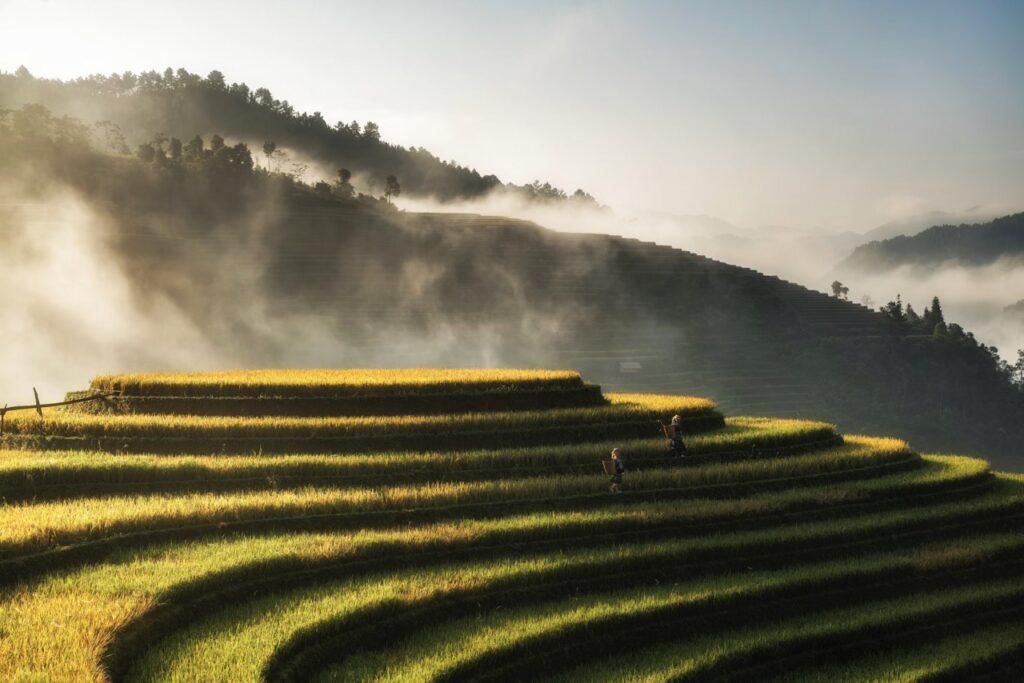
Mu Cang Chai weather divides into a wet season from May through September—with July and August receiving the heaviest rainfall—and a dry season from October through April. September and October offer the most reliable conditions for photography: the terraces turn golden during harvest, rainfall tapers off, and morning mist layers the valleys without obscuring the landscape. Temperatures range from 15°C to 28°C depending on elevation and season, with cooler nights from November onward.
The rice terraces of Mu Cang Chai exist because of the weather, not in spite of it. Highland monsoon rains flood the paddies from late May through August, creating the mirror-like surfaces that photographers chase in June and early July. By mid-August the rice plants stand tall and green, and the heavy convective storms that built them begin to ease. September marks the transition: rainfall drops by half, the grain ripens to amber, and the harvest begins in earnest across the valley floors and mid-elevation plots. Climate conditions in Yen Bai Province are dictated by altitude. The town center of Mu Cang Chai sits near 1,000 meters, but the terrace viewpoints—La Pan Tan, Che Cu Nha, De Xu Phinh—range from 1,200 to 1,800 meters, where temperatures run three to five degrees cooler than the lowlands and morning fog lingers until mid-morning. October delivers the most stable weather: daytime temperatures settle between 20°C and 25°C, skies clear by late morning, and the harvest wraps up by month's end. November through February brings the dry season in full—crisp air, negligible rain, and night temperatures that can dip to 10°C at higher elevations. Understanding the rainfall cycle is essential for timing a visit. July sees the highest monthly totals, often exceeding 300 millimeters, which translates to frequent afternoon downpours and muddy access roads. April and May remain dry but warm, with temperatures climbing toward 28°C in the valleys and dust replacing mud on unpaved routes. The shoulder months—late September and early October—balance accessibility with visual drama: the terraces glow gold, the roads remain passable, and the likelihood of all-day rain is low. Visitors arriving between late September and mid-October encounter the convergence of favorable weather and peak agricultural beauty, the narrow window when mu cang chai weather aligns with the harvest calendar and the landscape delivers its most photogenic form.
“The rice terraces of Mu Cang Chai exist because of the weather, not in spite of it.”
The most favorable time to visit Mu Cang Chai occurs during the harvest season in late September and early October, when temperatures are mild and the rice terraces turn golden. For daily visits, prioritize the early morning hours to secure stable lighting and comfortable temperatures.
Warm, 20°C–28°C; rainfall increases.
Fields are filled with water to prepare for planting, creating reflective surfaces.
Cool, 15°C–22°C; dry air.
Rice terraces transition to a golden hue, marking the peak period for visitors.
—
Best arrival window for clear visibility and photography before the heat of midday.
—
Direct sunlight may create harsh shadows; plan for rest or transit during these hours.
Verdict: The optimal period is mid-September to early October, arriving between 06:00 and 10:00 to experience the harvest scenery under clear, temperate conditions.
The Mu Cang Chai Rice Terraces are accessible to visitors at all hours throughout the week. While the area is open 24/7, travelers should coordinate their arrival with daylight conditions.
Access to the Mu Cang Chai Rice Terraces is free of charge for all visitors. Please note that weather conditions do not affect official entry status, though they may influence road conditions.
Verdict: A typical adult pays 0 VND for entry, with potential minor costs only arising for specific private viewpoint access or motorbike services.
Mu Cang Chai District in Yen Bai Province is accessed primarily from Hanoi via road. Travelers should prioritize weather forecasts, as mountain fog and heavy rain frequently impact visibility and road safety on high-altitude passes.
Hanoi via National Highway 32 (QL32) through Nghia Lo
Hanoi My Dinh Bus Station to Mu Cang Chai town
Private transfer via National Highway 32
Plan your journey within the best arrival window of 06:00–17:00 to navigate mountain roads during optimal daylight and avoid the hazards of driving in evening mist.
Mu Cang Chai's mountain climate demands layered gear and weather-ready preparation.
Everything you need to know about mu cang chai weather
The best time to visit is typically during the harvest season or the water-pouring season when mu cang chai weather is most temperate. Travelers should prioritize the best arrival window of 06:00–17:00 to enjoy clear skies for photography.
While the area remains accessible, unpredictable mu cang chai weather can occasionally make mountain roads slippery for motorbikes. It is recommended to check local forecasts before departing from Hanoi.
Highland regions often experience mist and rapid shifts in mu cang chai weather throughout the day. Visitors should prepare for cooler temperatures in the evening compared to the warmer valley floors.
Given the variable mu cang chai weather, light layers and waterproof gear are essential for your trip. Sturdy footwear is advised for navigating the steep trails along the terraced landscape.
Heavy rain can occasionally impact visibility and trail safety in the mountains. Staying updated on regional alerts ensures a smooth experience while exploring these UNESCO-worthy hill tribe landmarks.
Our logistics focus on clear visibility periods, so itineraries are flexible to account for shifting mu cang chai weather. This ensures you can witness the golden rice fields and valley vistas under optimal conditions.